Winsted, Connecticut — March 12, 2026 — Public safety leaders, behavioral health professionals, and community partners from across Connecticut and neighboring states gathered at CT State Community College – Northwestern for the Deflection Summit, marking the second summit hosted at the campus in the past three years. The event highlighted the growing collaboration between first responders, corrections professionals, and behavioral health providers working together to address substance use and behavioral health challenges in their communities.
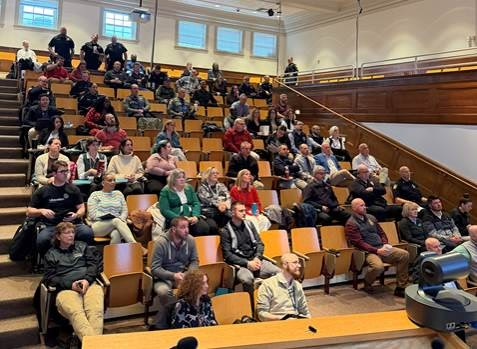
The summit was co-hosted by Community and Law Enforcement for Addiction Recovery (CLEAR), McCall Behavioral Health Network, and CT State Community College – Northwestern, and brought together representatives from law enforcement, fire service, EMS, corrections, probation and parole, behavioral health providers, and community organizations. Participants shared strategies that connect individuals to treatment, recovery supports, and community services rather than deeper involvement in the criminal justice system.
The summit was facilitated by Lauren Pristo of CLEAR/McCall Behavioral Health Network and Scott Allen, Executive Director of Community Health at Cordata Healthcare Innovations, who guided discussions on collaborative models that support individuals experiencing substance use disorder, mental health crises, and other complex social challenges. “Over the past several years, we’ve seen firsthand how powerful collaboration can be when first responders, behavioral health providers, and community partners come together with a shared purpose,” said Lauren Pristo, MPH, Director of Community Engagement at McCall Behavioral Health Network and CLEAR statewide project manager. “Summits like this allow communities to learn from one another, strengthen partnerships, and continue building compassionate, coordinated responses that connect people to care and support.”
A highlight of the event was the participation of Cordata Healthcare Innovations partners from Vermont and Rhode Island, who joined Connecticut CLEAR partners to share the innovative work being led in their states. Panelists discussed how agencies across fire service, EMS, corrections, and probation and parole are strengthening community responses through proactive outreach, Situation Tables, and deflection initiatives designed to connect vulnerable individuals with services and support.
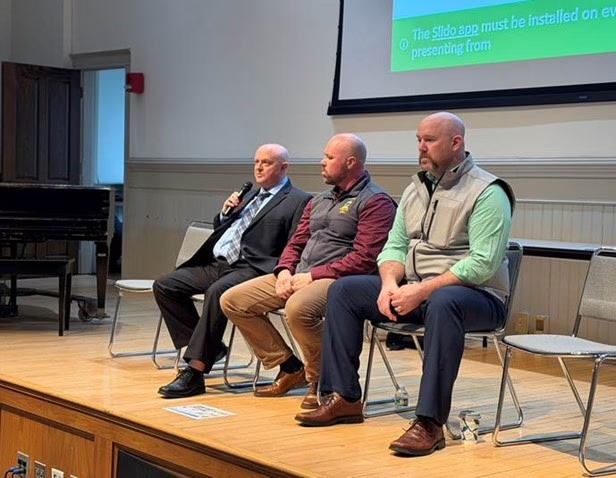
Chief Michael Carey, East Providence Fire Department (Rhode Island), speaks during a panel discussion alongside Michael Arace, District Manager for the Vermont Department of Corrections Probation & Parole, and Lieutenant Jake Larrabee of the Montpelier Fire Department (Vermont) at the Deflection Summit held at CT State Community College – Northwestern in Winsted. The panel highlighted regional collaboration and how agencies are strengthening community responses through proactive outreach, Situation Tables, and deflection initiatives.
Fire, EMS, and Corrections Panel
Panelists included Chief Michael Carey of the East Providence Fire Department (Rhode Island), Lieutenant Jake Larrabee of the Montpelier Fire Department (Vermont), and Michael Arace, District Manager for the Vermont Department of Corrections Probation and Parole. Together, they shared how fire departments, EMS providers, and corrections professionals are collaborating with community partners to support individuals returning to the community and those experiencing behavioral health crises.
CLEAR Law Enforcement Panel
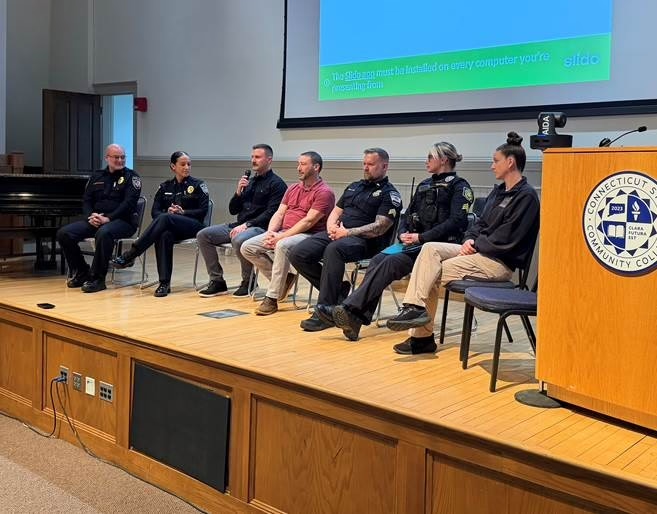
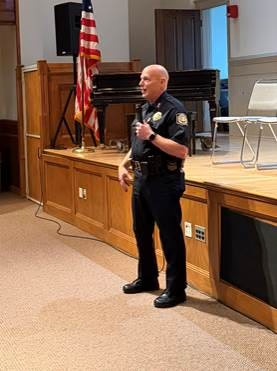
The CLEAR Law Enforcement panel featured an all-star lineup of CLEAR outreach officers and leaders advancing deflection and proactive outreach efforts across northwest Connecticut communities. The panel was led by Watertown Police Chief Joshua Bernegger and Deputy Chief Rene Dominguez, and included Officer Piazza and Officer Penna of the Newtown Police Department; Sergeant Kelly of the Torrington Police Department; Sergeant Hubbard of the Winchester Police Department; and Officer Abalan of the Granby Police Department.
Panelists shared their experiences responding to behavioral health and substance use calls for service and discussed how collaborative deflection efforts—working alongside fire departments, EMS providers, behavioral health partners, and community organizations—are helping to reduce repeat calls and connect individuals with treatment and support services.
“Across the country, we are seeing a shift toward collaborative models that bring public safety and community health together,” said Scott Allen, Executive Director of Community Health at Cordata Healthcare Innovations. “Programs like CLEAR, proactive outreach teams, and Situation Tables demonstrate how agencies can work together to engage individuals earlier, connect them with services, and ultimately create safer and healthier communities.”
Summit Collaboration and Regional Impact
Local law enforcement leaders from communities across northwest Connecticut also participated in discussions on how collaborative deflection efforts are strengthening partnerships between police departments, fire and EMS agencies, behavioral health providers, and corrections partners.
The summit reinforced a key theme: individuals experiencing substance use disorder, mental health crises, or other social challenges often interact with multiple systems — including first responders, healthcare providers, and corrections. By working collaboratively, communities can intervene earlier, build trust, and create pathways to care that improve both public health and public safety outcomes.
Participants also engaged in networking and facilitated discussions designed to share best practices, identify implementation challenges, and strengthen regional partnerships that support coordinated outreach and intervention efforts.
About CLEAR
Community and Law Enforcement for Addiction Recovery (CLEAR) is a collaborative initiative that connects individuals experiencing substance use and behavioral health challenges with treatment, recovery supports, and social services through partnerships between law enforcement, first responders, public health, behavioral health, and community providers.
Media Contact
Lauren Pristo, MPH
Director of Community Engagement
McCall Behavioral Health Network
lauren.pristo@mccallbhn.org